


News Centre


2026-03-25 15:03:18 • Corporate News
Post-exertional Dyspnea, Stroke, and Heart Failure? YunKang Whole Exome Sequencing Unlocks a Rare Etiology
A middle-aged female patient presented with post-exertional dyspnea without obvious triggers for three months – symptoms occurred even when walking briskly on flat ground. Initially, this did not raise significant concern. However, half a month ago, her dyspnea suddenly worsened, accompanied by bilateral lower limb weakness. Seven days prior, she fell accidentally and was taken to the hospital. The test results were alarming: acute exacerbation of chronic heart failure, hypertrophic cardiomyopathy, cardiac amyloidosis could not be ruled out, and brain MRI indicated acute lacunar infarction with stroke-like episodes.

Adding to the complexity, the patient had a generally fair baseline health status but a long history of hypertension with poor blood pressure control, as well as diabetes mellitus managed with long-acting insulin aspart 30, and recently her blood glucose had been fluctuating considerably. Heart failure, stroke, and glycemic dysregulation – these multiple symptoms intertwined. An initial diagnosis seemed to point to cardiovascular or cerebrovascular disease, yet this approach quickly hit a bottleneck.
To uncover the underlying cause, physicians sequentially ruled out light-chain amyloidosis, transthyretin amyloidosis, Fabry disease, and other conditions. Cardiac MRI revealed no clear predisposing findings. A battery of tests failed to identify the culprit, leaving the clinical team perplexed.
Confronted with this complex and challenging case, the team decided to leverage precision diagnostic technology as a breakthrough. YunKang · DaAn Clinical Laboratory performed whole exome sequencing plus mitochondrial genome sequencing on the patient.
Ultimately, a key clue was found at the genetic level: the patient carries a heteroplasmic m.3243A>G variant in the MT-TL1 gene, with a mutation burden of approximately 21.90%. This variant is precisely the hotspot mutation for MELAS (mitochondrial encephalomyopathy, lactic acidosis, and stroke-like episodes) syndrome!
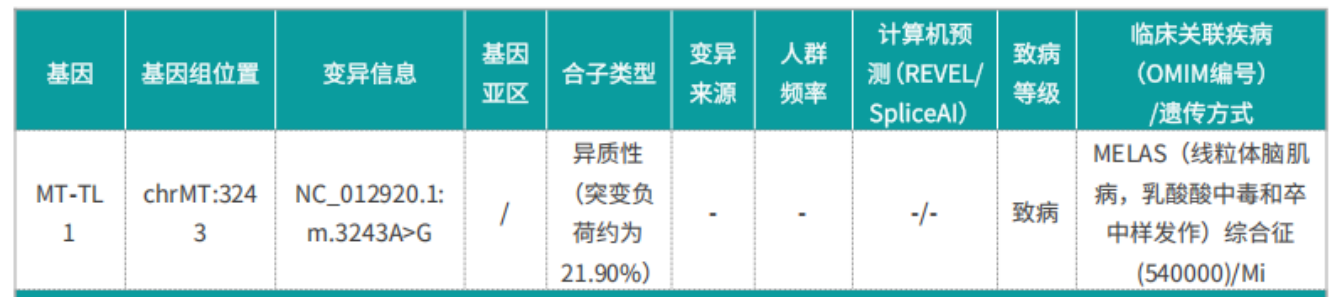
YunKang · DaAn Clinical Laboratory whole exome sequencing results
MELAS syndrome is a rare, multisystem mitochondrial disorder that can involve the cardiovascular, nervous, and muscular systems. Diabetes mellitus, cardiomyopathy, and stroke-like episodes are all typical manifestations – closely matching the patient's dyspnea, heart failure, stroke, and blood glucose fluctuations.
Thus, this puzzling case, which initially appeared to be a cardiovascular or cerebrovascular disease, finally revealed its true cause: a rare mitochondrial disorder arising from a genetic variant.
This precise discovery cleared the confusion that had troubled the clinical team for days. It is reported that after receiving the genetic testing report, the attending physician felt a great sense of relief. Targeted therapy tailored to the patient's condition has now been systematically initiated.
For complex, difficult-to-diagnose cases with confusing symptoms, pinpointing the cause of a rare disease, whole exome sequencing proved to be the critical step.
As an important tool for precise diagnosis of rare diseases, whole exome sequencing captures and enriches the DNA of all exonic regions across the genome for high-throughput sequencing. It can directly identify genetic variants associated with protein-function alterations, opening a breakthrough for diagnosing challenging and rare diseases.

YunKang · DaAn Clinical Laboratory's whole exome plus mitochondrial genome sequencing covers all exonic regions and 20 bp of flanking intronic sequences of more than 20,000 human genes, along with the entire mitochondrial genome. It detects variants associated with the patient's phenotype and reports pathogenic or likely pathogenic variants in the 84 genes recommended by the American College of Medical Genetics and Genomics (ACMG) guidelines.
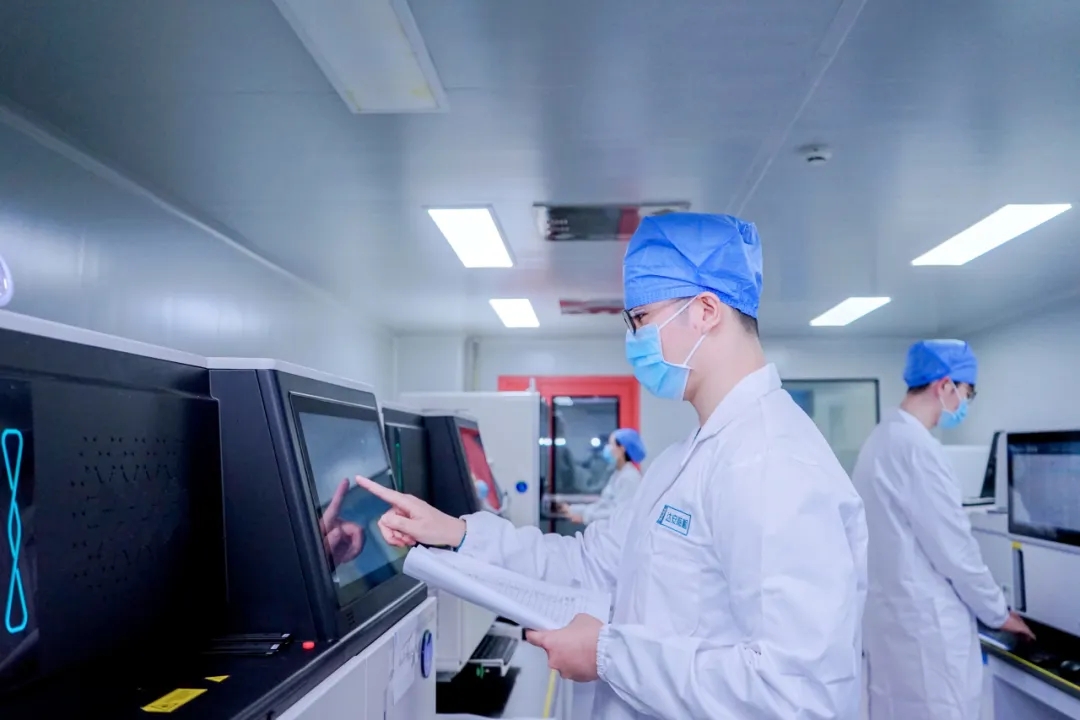
The detected variant types include single nucleotide variants (SNVs), short insertions and deletions (Indels), and copy number variants (CNVs). With our precise genetic testing technology, we support the diagnosis and treatment of rare diseases, helping more complex cases find the correct answer!
News Centre
News recommendation


Yunkang Group Limited
Address: No. 6 Lizhishan Road, Science City, Huangpu District, Guangzhou
Telephone: 020-32106666/800-830-3620/400-830-3621
E-mail: pr@yunkanghealth.com
Follow
yunkang
yunkang
关注云康
Copyright 2023 Yunkang Group Limited. All rights reserved. 粤ICP备19114072号-4 Privacy Policy | Disclaimers 网站建设技术支持:唯引互动
